

Significant developments took place over the past week in Azerbaijan’s and Armenia’s engagement with European institutions. Armenia’s capital, Yerevan, is currently hosting two major European summits, among the most significant international political events since the country gained independence.
By contrast, Azerbaijan has announced the suspension of all cooperation with the European Parliament. At the same time, official Baku continues to strengthen its military, economic and energy cooperation with Prague, as reflected in several concrete projects announced last week.
Czechia-Azerbaijan relations: A shift away from traditional foreign policy principles
During Czech Prime Minister Andrej Babiš’s official visit to Azerbaijan on April 27, cooperation in the defense industry was one of the main topics of discussion, alongside the fields of economy, energy and tourism. Speaking about his country’s existing opportunities for defense cooperation in Azerbaijan, Babiš stated that the Czechoslovak Group (CSG) is already operating in Azerbaijan, a joint venture has been established, and products are being manufactured.
According to him, Czechia is also represented in Azerbaijan by the firearms manufacturer Colt, Aero Vodochody and the state-owned company Explosia: “All of these companies offer joint projects and cooperation. There are already concrete projects, but we can do even more.”
Babiš noted that Aero Vodochody provides de facto maintenance and repair services for the aging L-39 aircraft: “We are presenting the new L-39NG aircraft, and we would be pleased if you would evaluate it,” Babiš stated, addressing Ilham Aliyev during a joint press conference. He added that Colt holds a strong position in the international market and supplies the world with high-quality products. “We are pleased that your police and other forces are already acquainted with these products,” he remarked.
Colt primarily manufactures small arms and tactical accessories for the Azerbaijani police and other security forces.
What will the Czechoslovak Group do in Azerbaijan?
The Czech defense holding Czechoslovak Group (CSG) recently announced the establishment of a joint venture with a local partner to provide maintenance services for armored vehicles and other land-based military equipment in Azerbaijan. According to Reuters, the program is worth “hundreds of millions of euros” and is planned as a long-term investment lasting at least 10 years.
The joint venture will be formed between CSG’s Excalibur Army Azerbaijani and an undisclosed local partner, operating under the name VEXA DS. The project includes the construction of a maintenance facility, with the strategic objective of establishing the company as a significant regional player.
“The partnership is based on industrial cooperation, the transfer of know-how and the development of local potential,” the statement noted. At the same time, the holding considers this project to be in line with its policy of developing industrial cooperation with Azerbaijan’s European partners and strengthening its own production and service capabilities.
Prague-based CSG is one of Europe’s leading defense industry groups. The company manages production facilities in the USA, Great Britain, Spain, Italy, Germany, Czechia, Slovakia, Serbia and India, exporting its products globally. The group includes Excalibur Army, Tatra Trucks, MSM Group and The Kinetic Group. The company employs over 14,000 people and reported revenues of 6.7 billion euros in 2025.
President Ilham Aliyev, highly valuing defense industry cooperation with Czechia, stated that there are excellent prospects for further development. According to him, Azerbaijan procures military products from Czechia, and negotiations on joint production projects are currently underway: “I am confident that this field has great potential for expansion. Azerbaijan is strengthening its defense potential, including through local production, and cooperation with experienced countries like Czechia is of particular importance.”
Babiš noted that an agreement had been reached for his first deputy to visit Azerbaijan again this year. At the same time, Ilham Aliyev accepted an invitation to visit Czechia.
“Czechia could open doors for Azerbaijan within NATO”
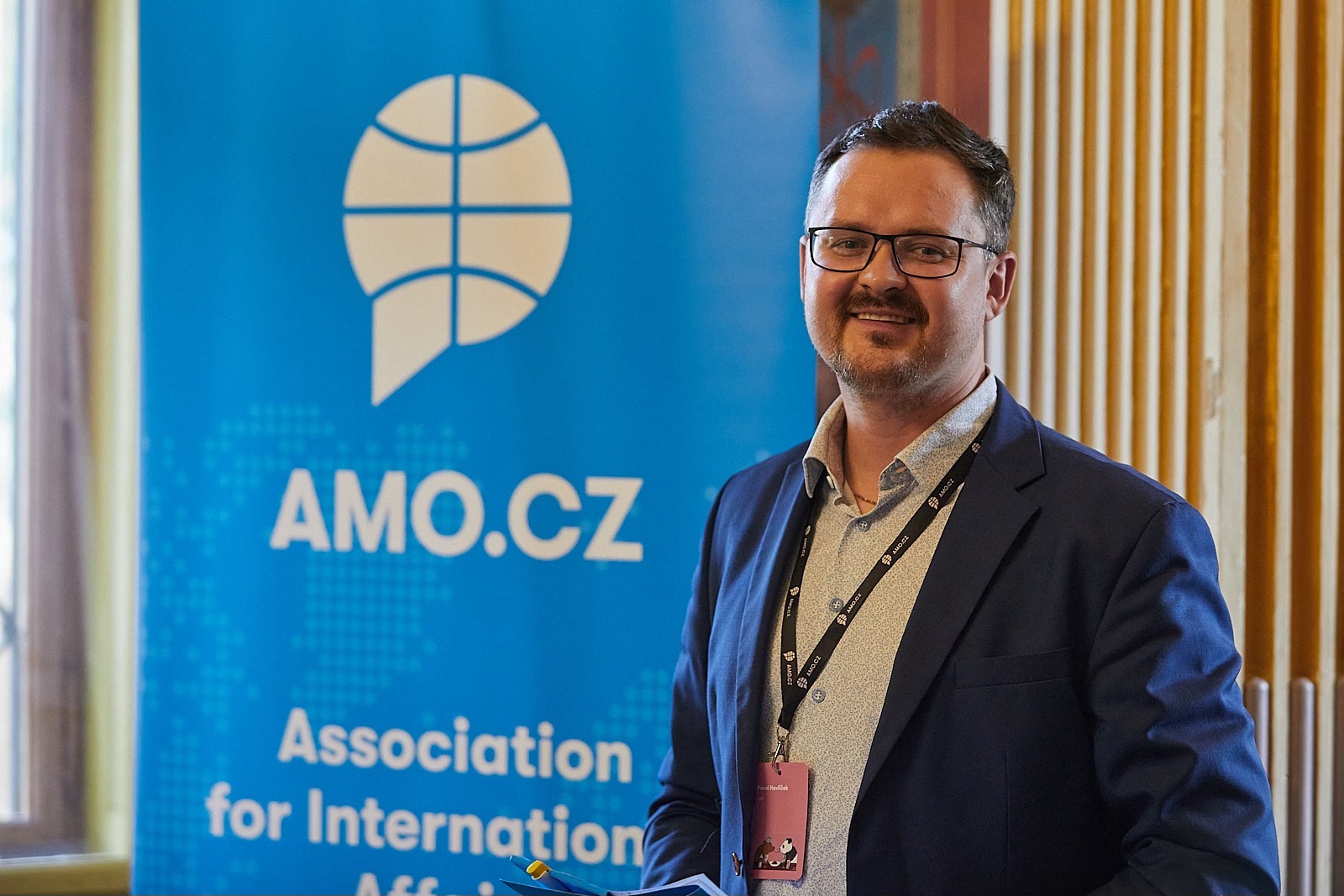
Pavel Havlíček, a research fellow at the Prague-based Association for International Affairs, told Abzas Media that this visit, led by Prime Minister Andrej Babiš, demonstrates Czechia’s new foreign policy approach:
“I think the visit reflected the new Czech foreign policy under Prime Minister Andrej Babiš, one based solely on national interests and a departure from traditional Czech foreign policy principles, including its value-based dimension and respect for democracy and human rights.”
According to him, one of the primary objectives of the visit was energy cooperation:
“Representatives of the Czech government came to Baku to discuss energy supplies, primarily natural gas, where new agreements were reached. This complements an already strong energy dialogue and cooperation based mainly on crude oil trade.”
Havlíček noted that there are also extensive opportunities for cooperation between Azerbaijan and Czechia in the defense sector: “Czechia has strong know-how in several sectors, including artillery, military aircraft, passive radio locators and other sophisticated technologies used in the military domain, which can be interesting.”
But could the expansion of Azerbaijan’s cooperation with Czechia in arms and defense production influence the country’s relations with NATO? Pavel Havlíček believes this primarily depends on the normalization of relations with neighboring Armenia.
“Azerbaijan might be a better ally to NATO, especially if it promotes stability in the region of the South Caucasus and continues to stand up to Russian assertive behavior in the region. At the same time, Czechia can be a country opening the doors and bringing the agenda into the Alliance, if approached positively,” he remarked.
The expert also noted that Czechia’s relations with Armenia are long-term, stable and positive.
“Czech foreign policy towards the region followed the logic of balancing between both partners, a so-called equidistant approach. In that sense, Czechia promoted cooperation with both parties and supported the process of normalization of their relations,” he added.
Czechia’s military relations with Armenia
Military-technical cooperation between Czechia and Armenia is developing based on an agreement signed in 2019. The Armenian parliament ratified the agreement in 2023.
The Ministry of Defense of Armenia stated that this agreement covers the production, import-export, licensing and quality control of military products, as well as personnel training and information exchange. Additionally, the establishment of a specialised working group to coordinate military-technical matters is envisioned.
Although it is reported that the legal framework for military cooperation between Czechia and Armenia has been completed, current cooperation is primarily limited to education, technical maintenance and non-lethal equipment. This remains more restricted in scope compared to the large-scale projects planned with Azerbaijan.
Yerevan hosts two European summits
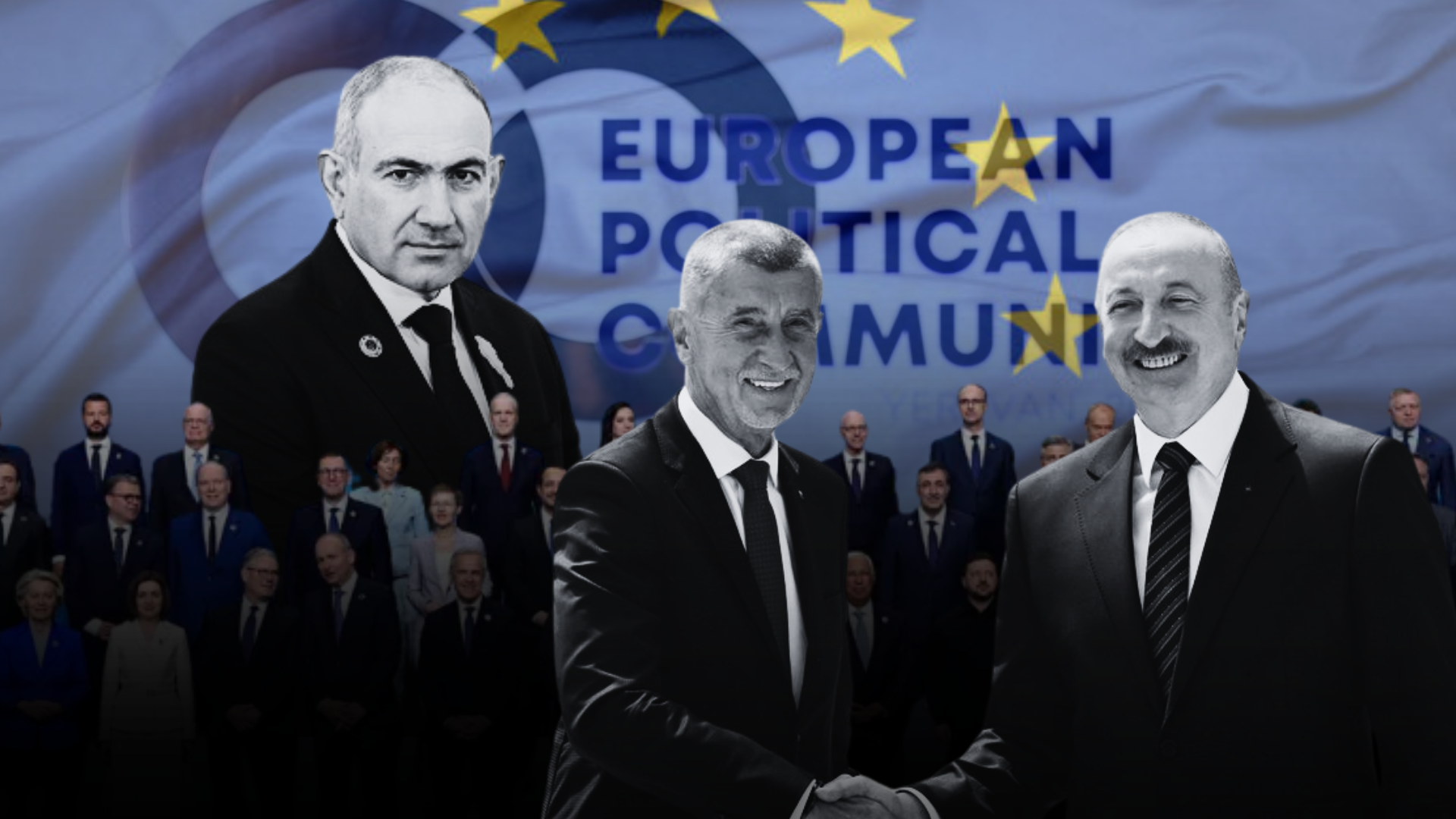
On May 4, the 8th Summit of the European Political Community (EPC) was held in Yerevan. Established in 2022 following the outbreak of war in Ukraine, this platform aims to bolster security and stability across Europe. The next summit is slated to be held in Baku in 2028.
Armenian Prime Minister Nikol Pashinyan stated that the Yerevan Summit serves to unite leaders and partners to strengthen cooperation, enhance trust and advance a collective vision for a secure, peaceful and unified Europe. According to him, the forum provided an opportunity to address vital issues ranging from hybrid threats and democratic resilience to connectivity and energy. Pashinyan emphasised that hosting the meeting in Yerevan carries particular significance.
“As one of the world’s oldest continuously inhabited cities, Yerevan stands as a symbol of endurance and renewal, reflecting Armenia’s role as a bridge between regions and cultures. For Armenia, this Summit represents both a milestone in our engagement with our European partners and an opportunity to reaffirm our strong and unwavering commitment to democratic values and the rule of law,” he remarked.
The 8th EPC Summit was conducted under the motto “Building the Future: Unity and Stability in Europe.” Heads of state and government from 48 nations were invited to the event. Notably, Canadian Prime Minister Mark Carney attended as a special guest, marking the first participation of a non-European nation in EPC history.
President Ilham Aliyev of Azerbaijan participated in and addressed the summit online.
Following the summit, the first-ever bilateral EU-Armenia summit is taking place on May 5. The objective is to elevate EU-Armenia relations to a strategic level and intensify cooperation in the energy and digital sectors. The meeting will also cover the development of dialogue on visa liberalization and Armenia’s prospects for EU membership. Leaders will further deliberate on progress regarding peace, security, connectivity and prosperity in the South Caucasus, as well as current global challenges, including developments in the Middle East and Ukraine.
Under the CEPA agreement, Armenia has committed to a comprehensive reform agenda based on democracy, transparency and the rule of law — specifically focusing on anti-corruption measures, judicial reform and increasing public accountability.
Meanwhile, some political observers claim that these summits are intended to provide direct political support to the administration on the eve of elections.
In the meantime, Azerbaijan’s Milli Majlis announced on May 1 that it had suspended cooperation with the European Parliament. Official Baku characterised this move as a response to the institution’s “biased policy,” “slander campaigns” and the new Armenia-related resolution adopted on April 30.
Author: Jasur Mammadov